
The History of the Stumbling Stones and Memorializing the Enslaved in Arlington
Sue Eisenfeld
March 5, 2025
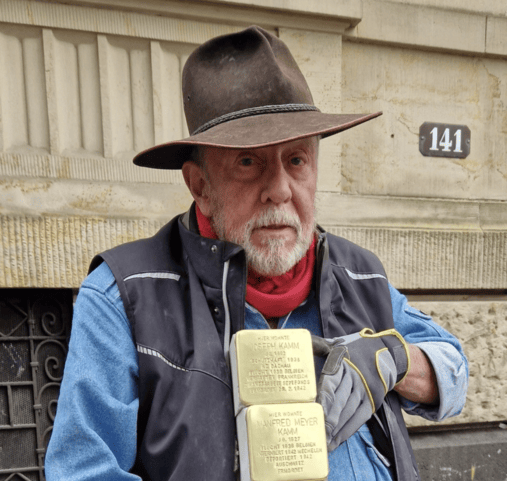
A person is only forgotten when his or her name is forgotten,” German artist Gunter Demnig frequently says, citing the Talmud, a central text of Judaism.[1] Thus, beginning in 1992, he decided to create an artwork that would quietly bring people’s attention to the millions of people—Jewish, gay, Gypsy, disabled, and other—murdered by the Nazis between 1933 and 1945—with a focus on memorializing them through their names.
Demnig created small concrete cubes topped by inscribed brass plates to be installed flush with the street or sidewalk near the last place each person freely chose to reside, work, or study. He called them Stolpersteine, or stumbling blocks or stumbling stones. Many read, “Here lived,” followed by a birthdate, deportation date, the name of the concentration camp in which they were murdered, and the date of their death. The artist intended for people to stumble upon them during everyday life.
“You won’t fall,” Demnig once said. “But if you stumble and look, you must bow down with your head and your heart.”[2]
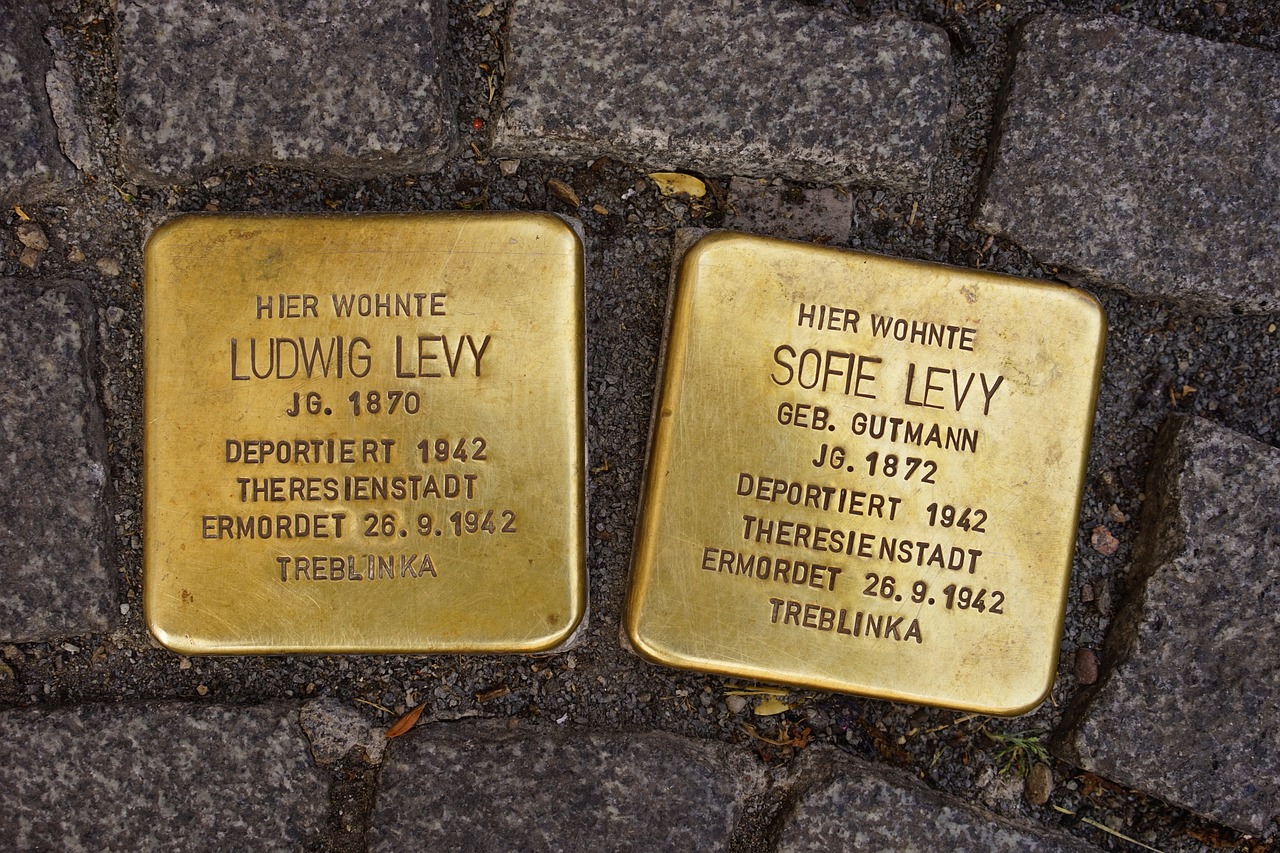
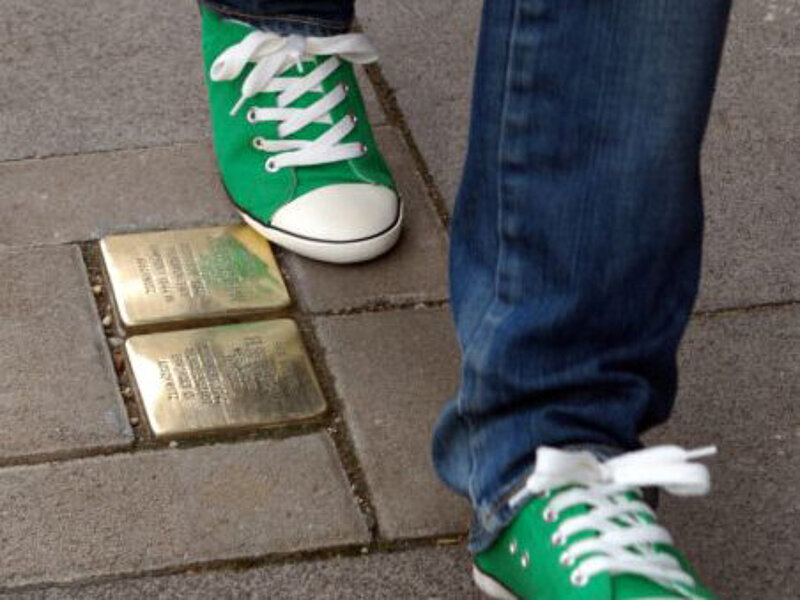

At first, the stumbling stones were placed only in Cologne, Germany. Then they expanded to Berlin.
Over time, the stumbling stones have become the largest decentralized monument in the world. The 75,000 original stones in Germany have grown into more than 100,000 stumbling stones being placed across Europe in more than 1,200 towns, in nearly 30 countries, including Germany, Austria, The Netherlands, Hungary, Poland, Czech Republic, Belgium, Ukraine, Italy, Norway, Slovakia, Slovenia, France, Croatia, Luxemburg, Russia, Switzerland, Romania, Greece, Spain, Belarus, Lithuania, Finland, Moldova, Denmark, Sweden, and Serbia.
Now, some schools have integrated the project into their curriculum. Students—as well as victims’ relatives, neighbors, and local history organizations—conduct research to uncover the names of Holocaust victims from their local area.
Genesis of Memorializing the Enslaved in Arlington
In June 2021, reporter Michele L. Norris wrote an opinion essay in The Washington Post called "Germany Faced Its Horrible Past. Can We Do the Same?”, in which she documents the many ways that Germany has reckoned with its Holocaust past and reflects that the United States has never had a similar reckoning about slavery.
(Writer Peter Cole suggested the same thing in a February 6, 2018 article in The Washington Post called “How a Small Stone Could Help America Reckon with its Worst History.”)
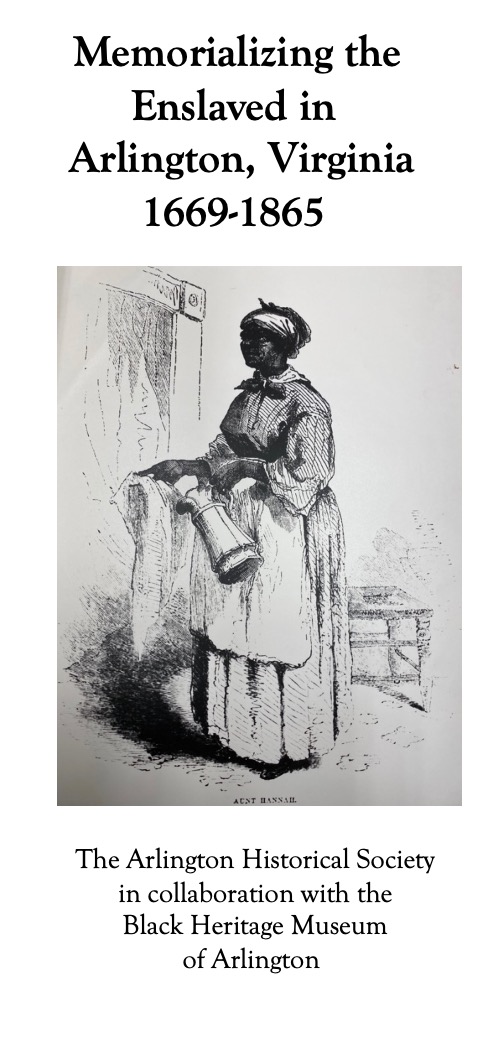
In 2021, the Arlington Historical Society (AHS) decided it would accept this challenge and initiated the “Memorializing the Enslaved in Arlington” project, or “MEA,” co-sponsored by the Black Heritage Museum of Arlington.
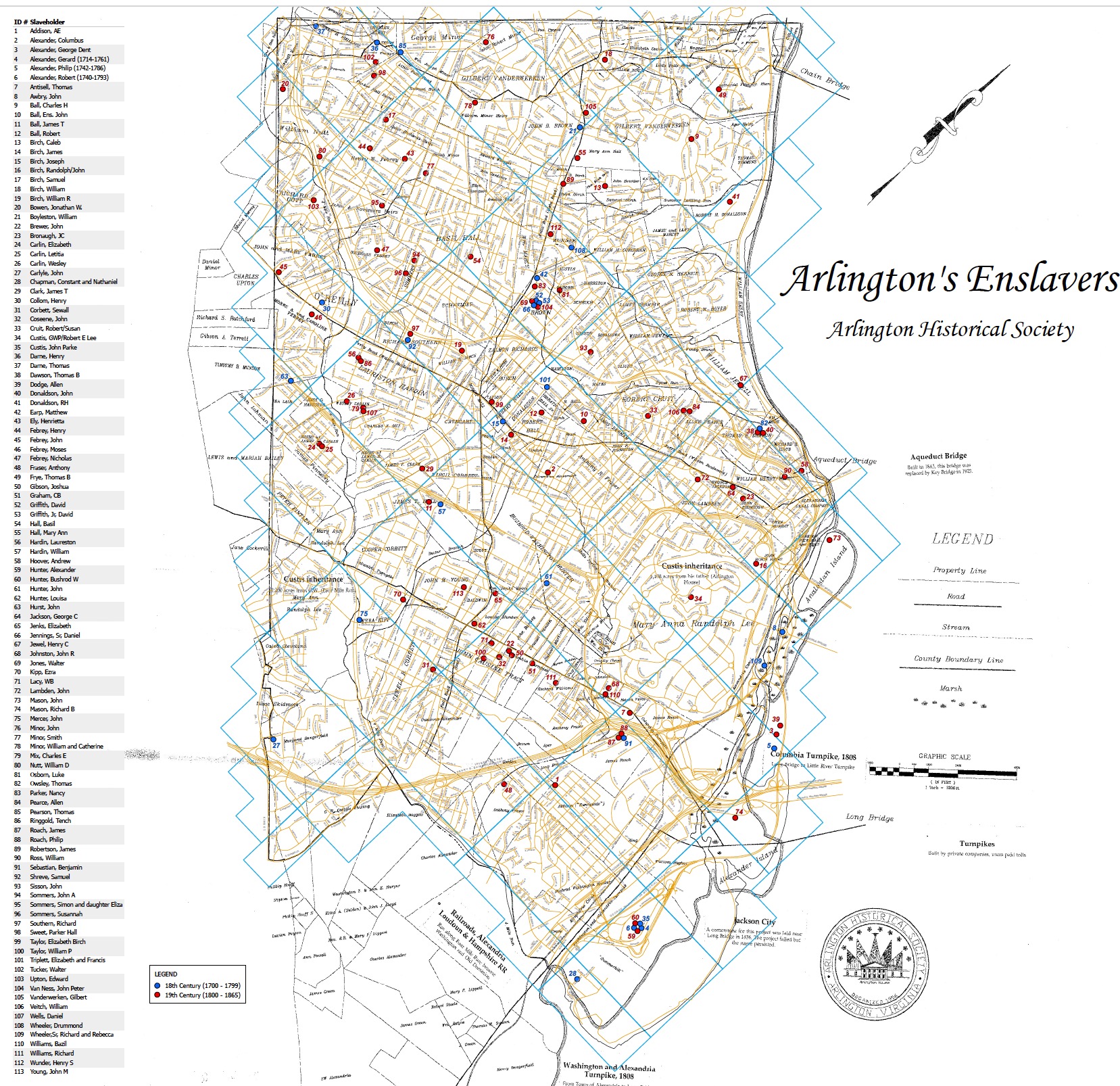
Researchers started looking through wills, inventories, court records and newspapers to uncover the names of enslaved individuals in Arlington, including the name of their enslavers, where the enslaved lived, years of births and deaths, and other personal information. Volunteers are helping to write the life stories of many of these people, based on available information.
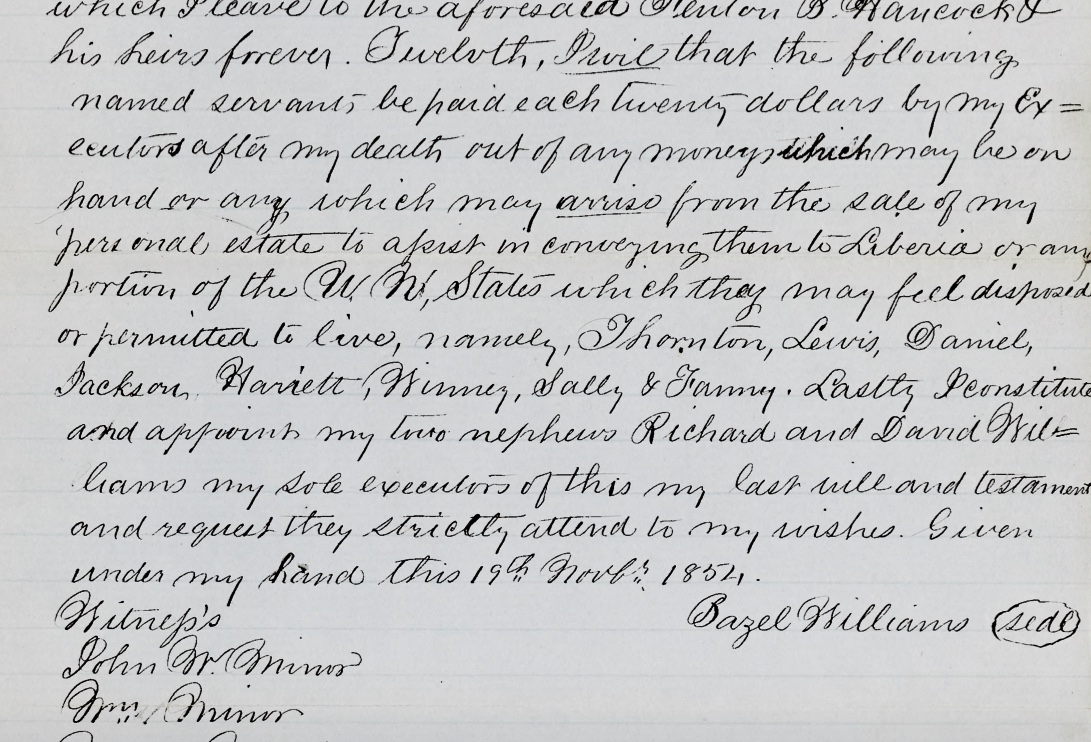
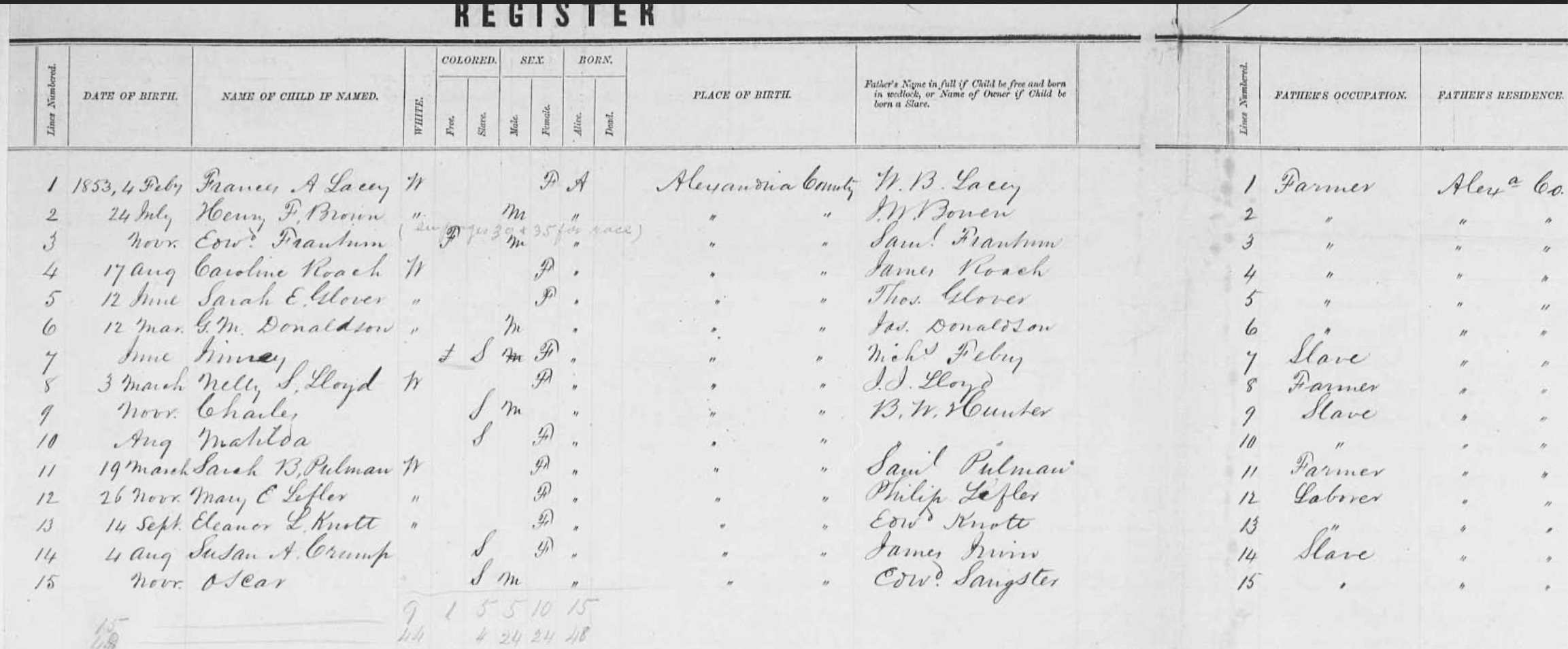
Researchers found that aside from three large plantations, most of the enslaved people of Arlington worked at small and large farms across the rural county, where present-day residents now live, shop, travel, and work.
To change the collective memory of people who live and walk in Arlington, the MEA project is installing stumbling stones, documenting the names and life details of the enslaved people at various locations around Arlington.
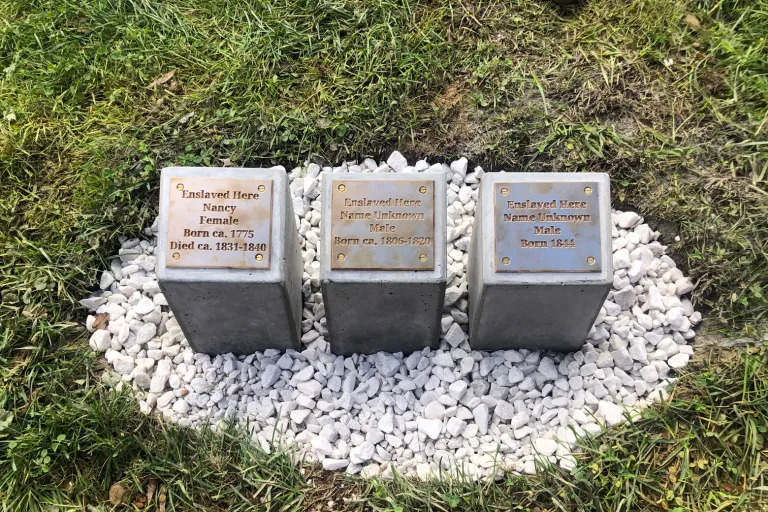
The first three stumbling stones, which were 4” x 4” bronze squares, were installed on October 28, 2023, documenting enslaved people who worked and lived at what is now known as the Ball-Sellers House. Among them was Nancy, born around 1775 and died between 1835 and 1838. The memorials also honor two unnamed males, one born circa 1806 and the other in 1844, and none of the three were known to the public before this project. These individuals were part of the Carlin family’s estate, owners of the Ball-Sellers house from 1772 until 1887.
Arlington Public Schools high school students in Arlington Tech’s CNC (computer numerical control) manufacturing class are designing and fabricating the stumbling stones. They are learning about enslavement in Arlington as well as the manufacturing process necessary to prepare and engrave metal. Both experiences will help them gain a greater understanding of the nation’s complicated past and a sense of how to help bridge the racial divides in our community now and in the future.
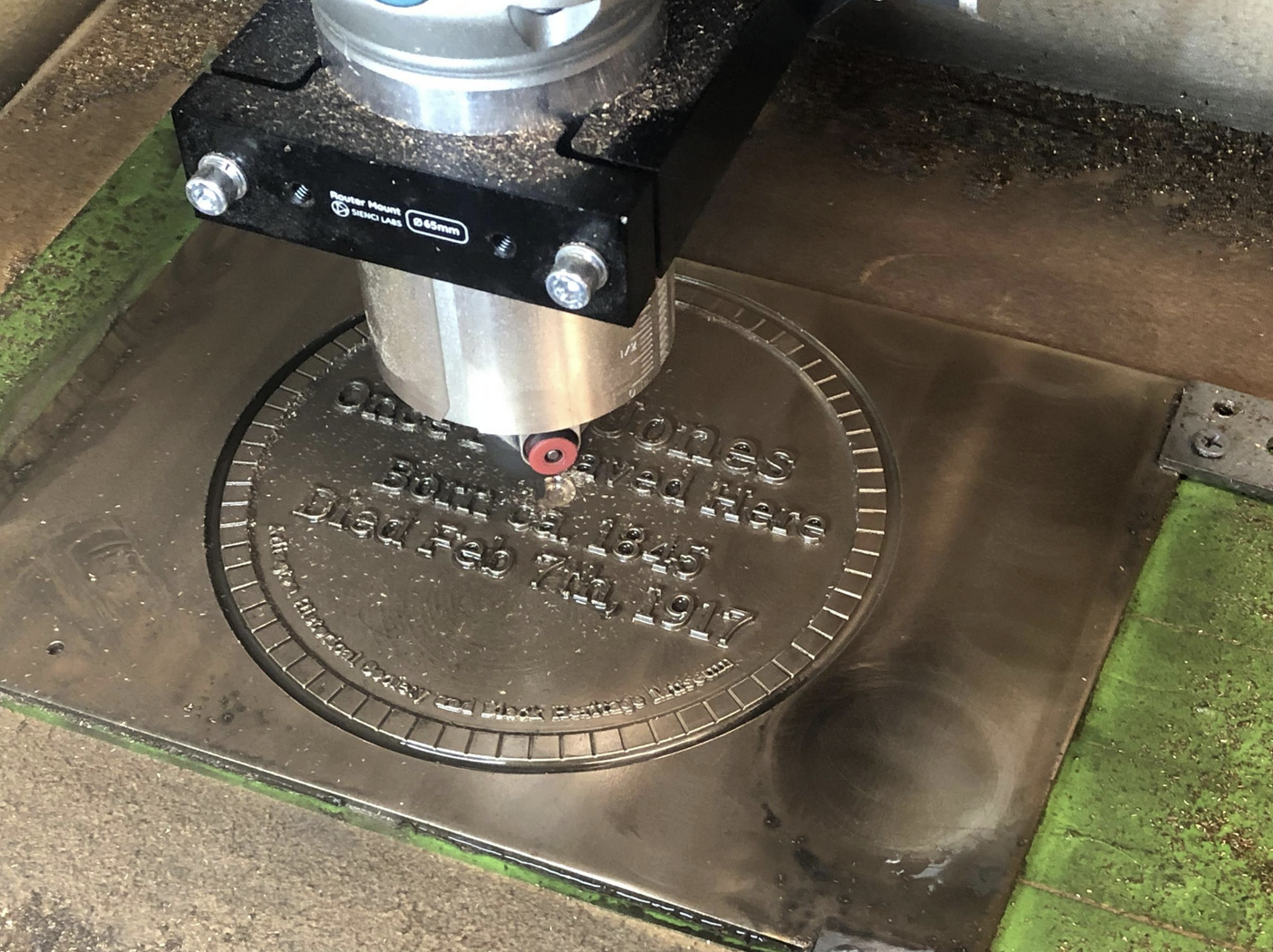

Stumbling stones progress, November 2024
The students will be modifying the original square design to create 6” round bronze plaques that can be inset into area sidewalks. The engraving is raised to make it non-skid.
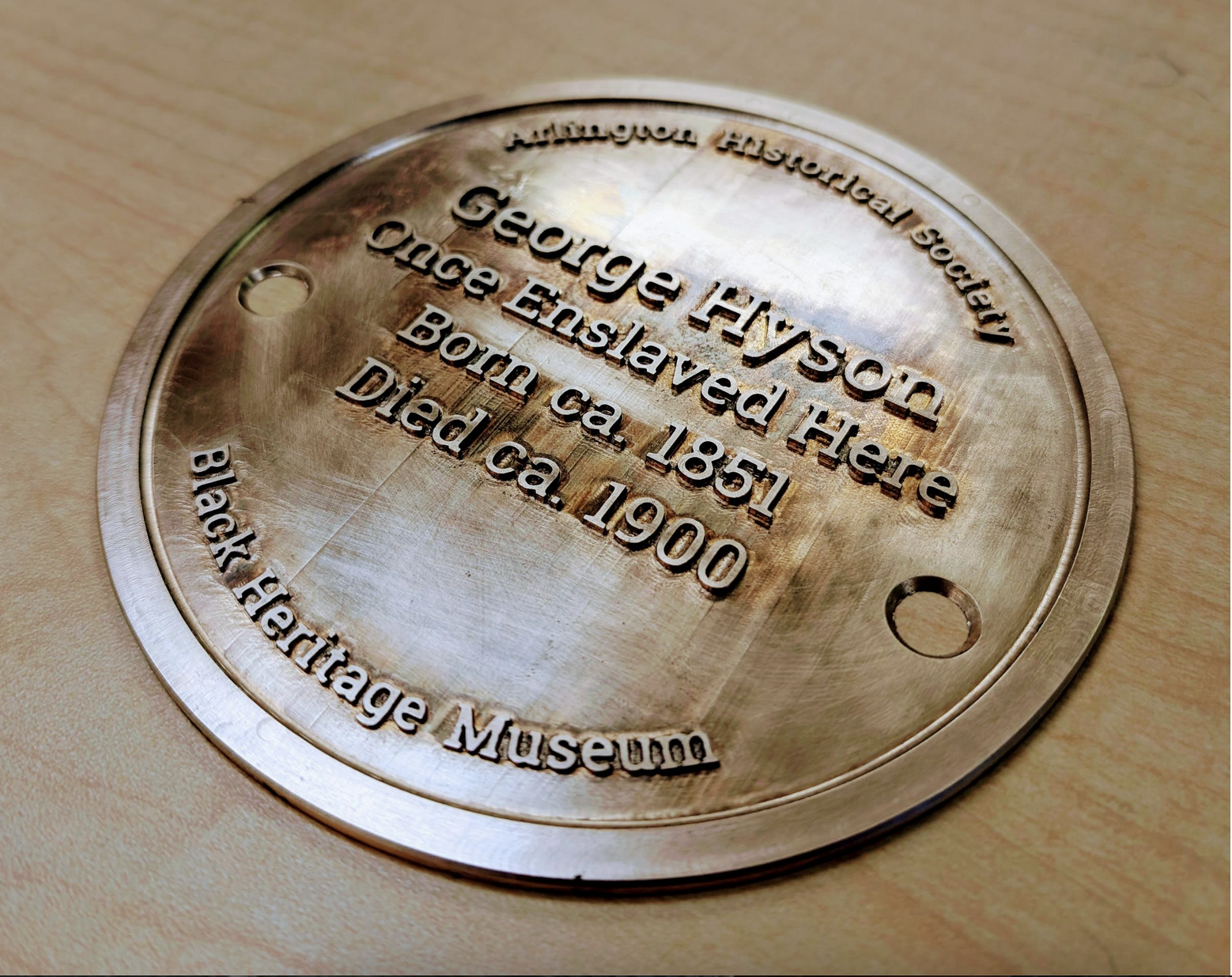
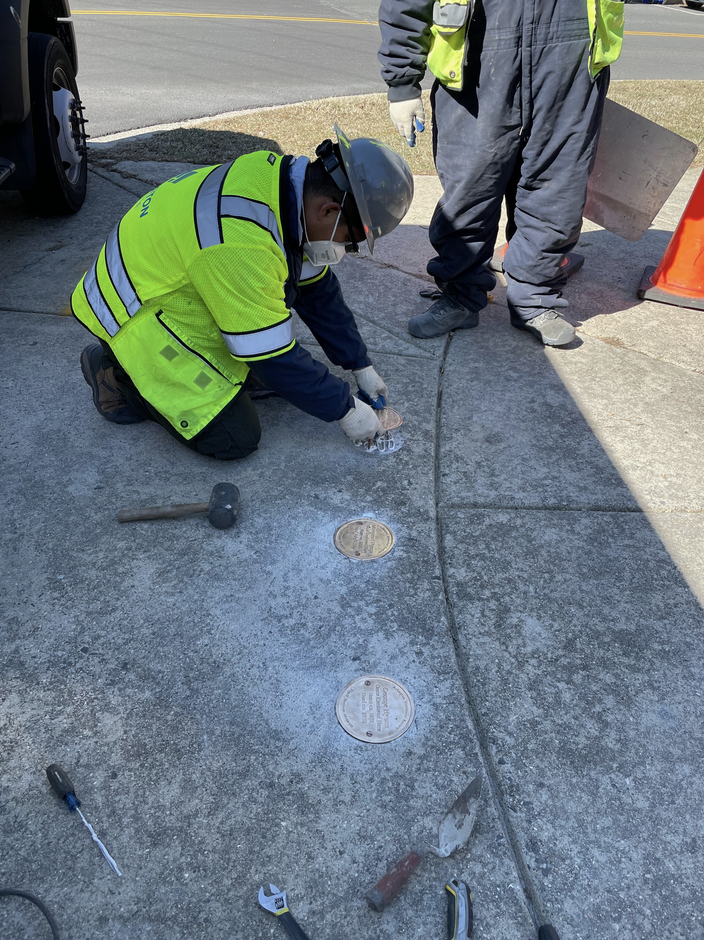
Per the AHS agreement with Arlington County, which provided some funding for the project and which has a commitment to advancing racial equity, the Arlington Department of Environmental Services will place the stones in the sidewalks in public rights of way. AHS will reach out to nearby homeowners and civic associations to educate them about the project.
Can you imagine what Arlington would look like if stumbling stones marked every location in the county where enslavers kept people in bondage, forced them to provide free labor under harsh and violent conditions, often separated from their families, over numerous generations?
Other groups in the United States have started stumbling stone project, too. Connecticut’s The Witness Stones Project laid its first stone in 2017 and has worked with students in 5 states.

The Stopping Stones project, an initiative of the Engagement Arts Fund, began in 2020 and has installed 40 memorials in 8 states.
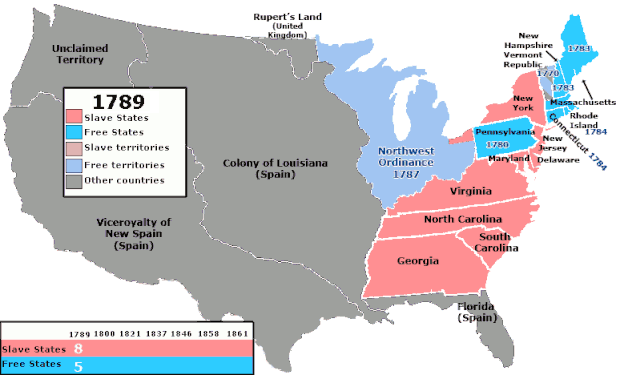
Can you imagine if every street in the United States were marked with stumbling stones for where enslaved people lived and worked—the streets of every state of South, and the streets of every state in the North, and the streets of many states in the Midwest and West.
People were enslaved in all of the following locations: Alabama, Arkansas, California, Connecticut, Delaware, Florida, Georgia, Illinois, Indiana, Iowa, Kansas, Kentucky, Louisiana, Maryland, Massachusetts, Maine, Michigan, Minnesota, Missouri, Mississippi, Nevada, New Hampshire, New Jersey, New York, North Carolina, Ohio, Oregon, Pennsylvania, Rhode Island, South Carolina, Tennessee, Texas, Vermont, Virginia, West Virginia, Wisconsin, and Washington D.C.
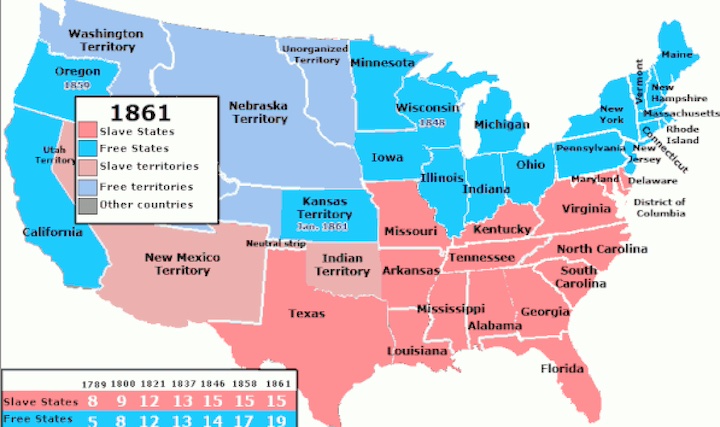
“Entire streets would be covered in brass stones…It would be impossible to walk down almost any street in this city without encountering a stumbling stone that reminded you of someone who once lived here, who was once enslaved here,” said Clint Smith, author of “Monuments To The Unthinkable,” in The Atlantic, referring to his hometown of New Orleans. [3]
“To imagine what a…stumbling stone project in the American South and, really, across the United States might be like was really striking and kind of startling...”
Endnotes:
[2] https://www.bbc.com/travel/article/20190328-the-holocaust-memorial-of-70000-stone