
Arlington House
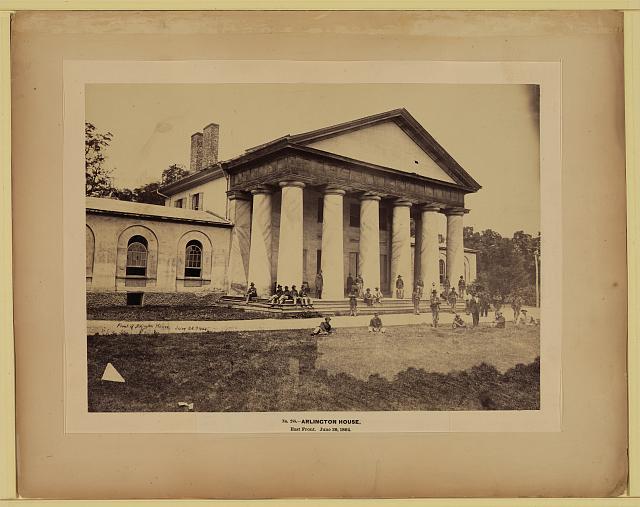
From 1802-1816, George Washington Parke Custis (GWP Custis), the grandson and adopted child of George and Martha Washington, and the father-in-law of Robert E. Lee, used enslaved laborers to build the largest plantation in the county, the Arlington Estate. Perched on a hill overlooking the Potomac River and Washington, DC, the Greek Revival mansion, named Arlington House, remains standing today.

Until his death in 1857, Custis and his wife Mary enslaved over 235 men, women, and children. When GWP Custis built Arlington House, he brought many enslaved people he inherited from his grandmother, Martha Washington. The men and women cleared the land and built roads and their own cabins. They cultivated the fields, operated a fishery, raised domestic animals, constructed and cared for the mansion, and personally served the Custis family.
Despite the practice being illegal and uncommon, Mary Custis taught her enslaved people to read the Bible. She encouraged the enslaved families to cultivate their own gardens and sell their produce for personal profit. These advantages did not spare the enslaved women from Custis’s sexual exploitation.
Over the years, several different family groups formed. Among the most prominent were the Bingham, Norris, Grey, Check, Burke, Parks, Taylor, and Richardson families.
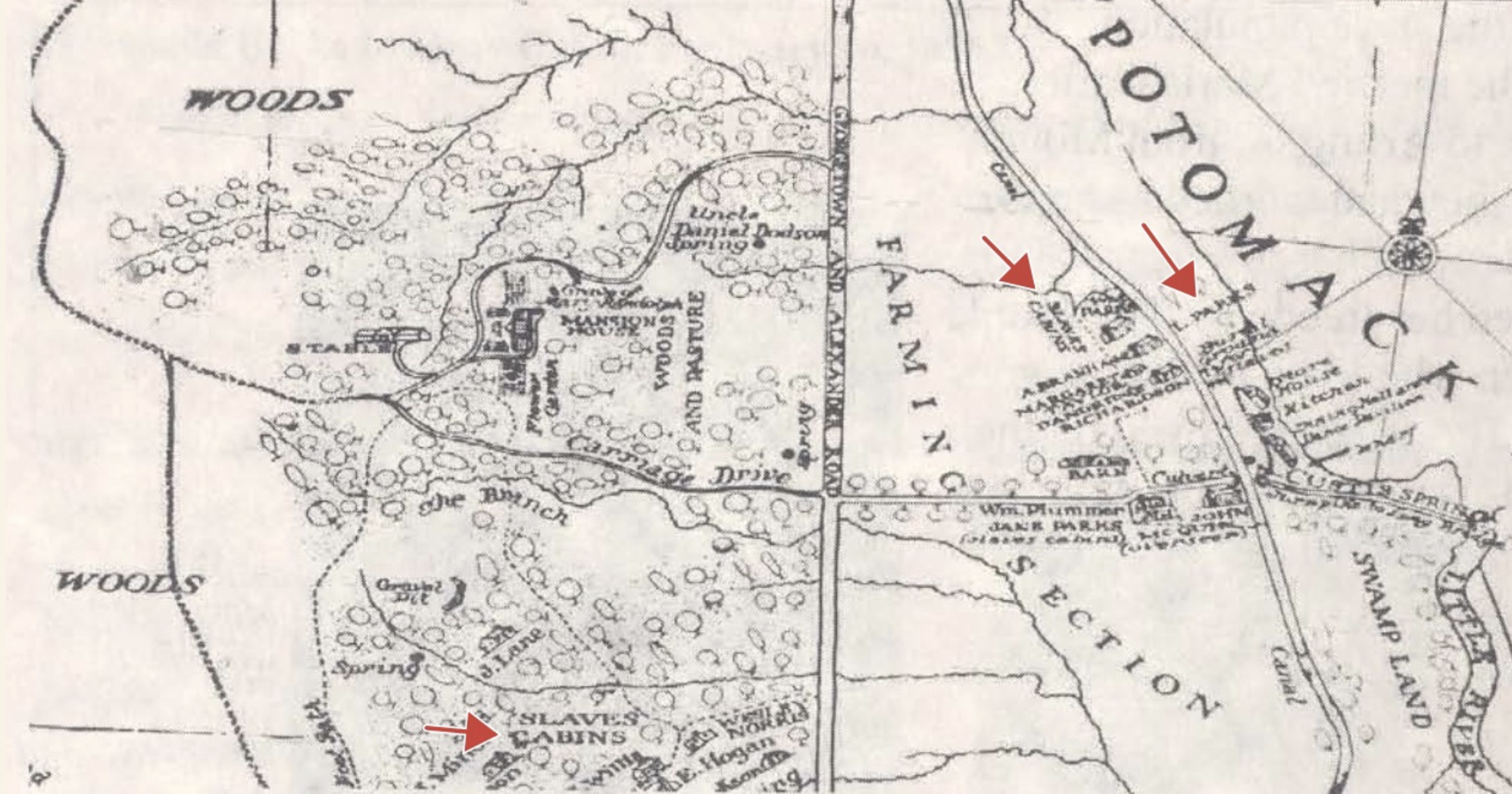
During the Civil War, Union troops occupied the plantation and transformed it into Arlington National Cemetery, our nation’s most hallowed ground. The estate also became the site of Freedman’s Village, a community for previously enslaved people. The village evolved into a thriving hamlet with schools, hospitals, churches, and social services–providing a model for other freedman’s communities throughout the South. In 1900, the U.S. government closed the village to provide additional land for Arlington National Cemetery. Residents were forced into increasingly segregated neighborhoods in Arlington such as Queen’s City, Green Valley, and Johnson’s Hill.
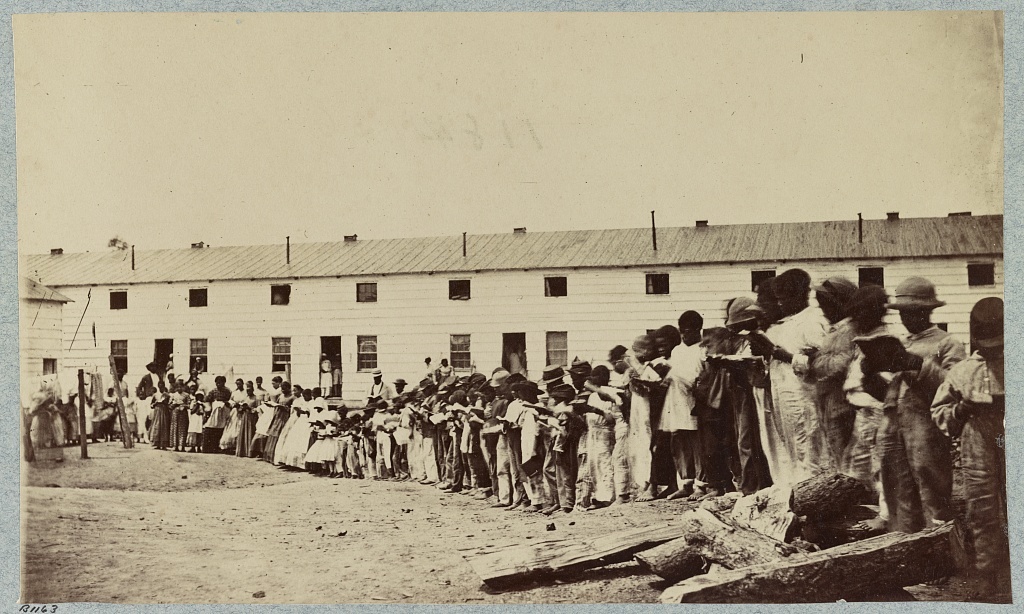

Names of the Enslaved People at Arlington House
Austin Bingham, Louisa Bingham, Harrison Bingham, Reuben Bingham, Parks Bingham, Edward Bingham, Henry Bingham, Austin Bingham, Leanthe Bingham, Lucius Bingham, Caroline Bingham, Caroline Bingham, Jem Bingham, Louisa Bingham, Unnamed Bingham, Caroline Branham, Leonard Norris, Sally Norris, Wesley Norris, Mary Norris, Sally Norris Gray, Thornton Gray, Emma Norris Gray Syphax, Sarah Gray, Harry W. Gray, Annice Gray, Ada Gray, Thornton Gray, Selina Gray, Obidiah Gray, John Gray, Julia Ann Check, Catherine Check, Louis Check, Henry Check, Unnamed Check, Old Shack Check, Catherine Burke, Fanny Burke, Mary Ann Burke, Agnes Burke, William Burke, Michael Meredith, Lawrence Parks, Gideon Lancaster, Magdalena Parks, George Parks, Amanda Parks, Perry Parks, Robert Parks, Martha Parks, Lawrence Parks, Patsy Clark Parks, James Parks, Leanna Parks, Matilda Parks, William Parks, Maria Carter Syphax, Lily, Elinor Bertha Syphax, William Syphax, Dandridge Taylor, John Taylor, Margaret Taylor, Billy Taylor, Quincy Taylor, Austin Grey, Austin Branham, Rachel Branham, Marcellena Branham, Almira Branham, Lucy Branham, Robert Branham, George Clark, Phillip Lee, Philip Merriday, Daniel Dodson, Ephraim Derricks, Ariana Carter, John Sawyer, Charles Sifax, Maria Carter Syphax, Elinor Bertha Syphax, William Syphax, Cornelius Syphax, Charles Syphax, Colbert Stewart Syphax, Shaulter Syphax, Austin Syphax, John Bryce Syphax, Ennis Gray Syphax, Maria Syphax, Mary Syphax, Washington Syphax, Edward Burke, Angelo Harris, Eleanor Harris, Nelson Harris, Delphy Harris, Virginia Harris, Nurse, Aunt Jody, Judith, Louisa, John, John, Eleanor, James, Eddison, Elijah, Lily, Eloisa, Charles, Sukey, Betsey, Kidder, Ally, Cassy, Oney, Edmund, Eliza, Doll, Philip, Nat, Zachariah, Judah, Ibby, Winney, William, Morris, Southy, Joseph, Edmond, Agga, Moll, Peg, Bett, Jim, David, Mingo Con, Ned, Paul, Janey, Austin, Dina, Larry, Coelia, Mason Amma, Paul, Peter, Joe, Molly, Unknown, Rachael, David, Manny, Billy, Mason, Molly, Joe, George, Harry, Amy, Caesar, Randolph, Beck, Julius Beck, Daniel, Isaac, Caroline, Wilson, Rachel, Jemima, Leanthe, Polly, Branden, Austen, Daniel, Charlotte, Elve, Eliza, Tim, Phill, Christopher Sheels, Judy, Louisa, Doll, Sall, Peter, Betty Davis, Nancy, Anny, Lucinda, Molly, Grace, Roger Billy, Peggy, Daniel, David, Will, Elish, Lucinda, Charles, Stella Branham, Angela, Samuel, Curry, Maria Caustin
Stories
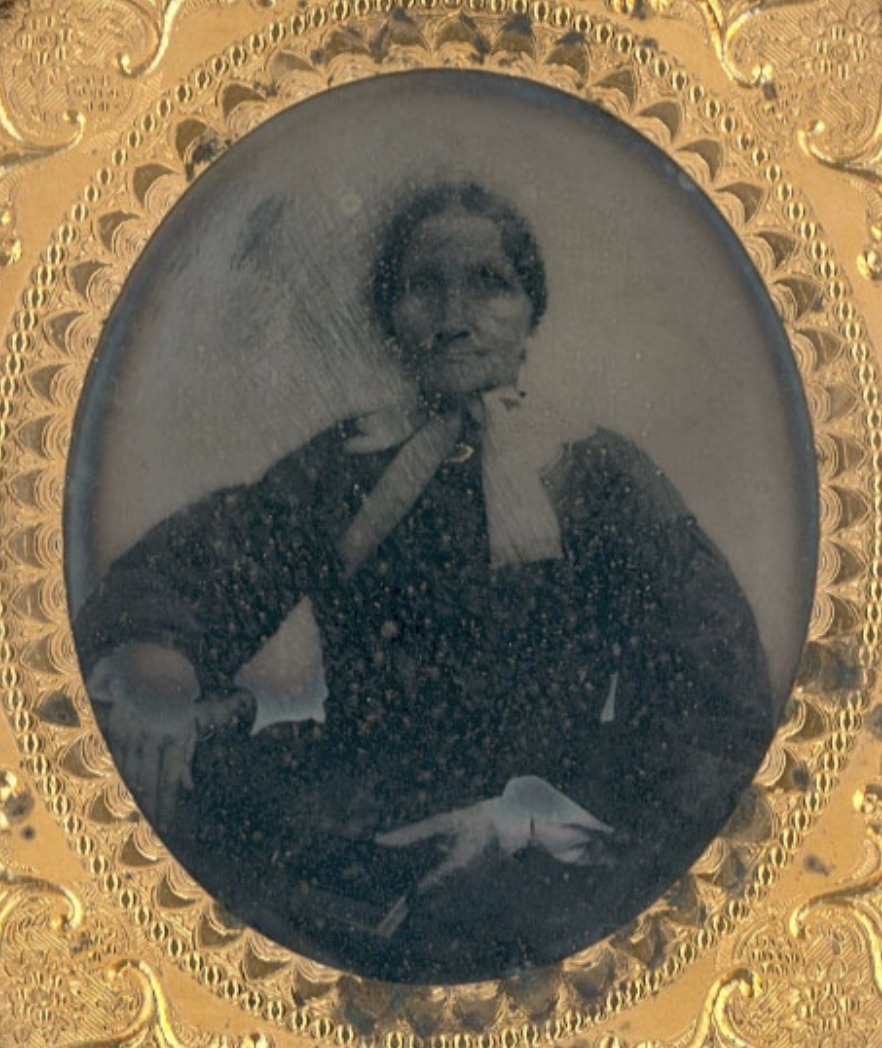
Maria Carter Syphax
Arianna Carter, enslaved by GWP Custis, gave birth to Custis’s child, Maria, in 1803. Maria grew up at Arlington House and was forced to serve as the personal servant of her half sister, Mary Custis. In 1821, she married Charles Syphax, a dining room servant.
As a conduit to freedom, GWP Custis sold Maria and her two children Elinor and William, in 1826 to Edward Stabler, a Quaker who quietly emancipated her and her children. They were granted “formal emancipation” in 1845. Soon after, Custis granted Maria 17 acres of land on the southwest corner of the Arlington estate. She and her 10 children lived on the land despite the fact that Charles remained enslaved at Arlington House. He gained his freedom in 1863.
During the Civil War, Arlington House and its land were taken by the federal government – so too was Maria’s land. Her son, William Syphax, successfully petitioned Congress to return the land in 1866.
The Syphax family has been a prominent African American family in Northern Virginia, strongly advocating for Black civil liberties. The Syphaxes would also, at the end of the Civil War, play a large role in the development of Freedman’s Village.
Wesley Norris
Wesley Norris was born in February 1830 to Sally[1] (1792-1872) and Leonard (Len) Norris (1788 – 1872) at Arlington House. Wesley and his family lived in housing for the enslaved staff, which included five small log cabins, a pump house for enslaved field hands, and two “dependencies” that served as dormitories for enslaved house servants, all built by enslaved people.
Wesley was among the hundreds of thousands of enslaved people who attempted to emancipate themselves throughout the nation (by 1860, 400,000 of them did so successfully). In 1859, at age 29, Wesley, his sister Mary, and their cousin George Parks ran away from Arlington House to the free state of Pennsylvania. Norris’s story was published in the National Anti-Slavery Standard in April 1866:
“… I was born a slave on the plantation of George Parke Custis; after the death of Mr. Custis, Gen. Lee, who had been made executor of the estate, assumed control of the slaves, in number about seventy; it was the general impression among the slaves of Mr. Custis that on his death they should be forever free; in fact this statement had been made to them by Mr. C. years before; at this death we were informed by Gen. Lee that by the conditions of the will we must remain slaves for five years; I remained with Gen. Lee about seventeen months, when my sister Mary, a cousin of ours, and I determined to run away, which we did in the year 1859; we had already reached Westminster, in Maryland, on our way to the North, when we were apprehended and thrown into prison, and Gen. Lee notified of our arrest . . .”
The three remained in prison for 15 days, after which they were returned to Arlington. When Lee asked them why they ran away, Norris said:
“…we frankly told him we considered ourselves free.”
Norris explained what happened next:
“He then told us he would teach us a lesson we would never forget: he then ordered us to the bard, where, in his presence, we were tied firmly to posts by a Mr. Gwin, our overseer, who was ordered by Gen. Lee to strip us to the waist and give us fifty lashes each, excepting my sister, who received but twenty; we were accordingly stripped to the skin by the overseer, who, however had sufficient humanity to decline whipping us; accordingly Dick Williams, a county constable, was called in, who gave us the number of lashes ordered; Gen. Lee, in the meantime, stood by, and frequently enjoined Williams to lay it on well, an injunction which he did not fail to heed; not satisfied with simply lacerating our naked flesh, Gen. Lee then ordered the overseer to thoroughly wash out backs with brine, which was done.”
After the whipping, Lee sent Mary Norris to Richmond, Virginia, where she was less likely to try to escape, to be hired out by someone in need of her labor (that is, her enslaver got paid for her to do work for someone else). Lee sent Wesley Norris and George Parks to jail in the Hanover County, Virginia, courthouse, after which they were moved to Nelson County, Virginia, to be hired out to work on the Orange & Alexandria railroad in Virginia and the Northeastern railroad in Alabama. Lee then moved them to Richmond, from which Norris escaped to freedom in the North in 1863.
After the Civil War, Wesley Norris’s parents, Sally and Len Norris, continued to live at Arlington House, and at least by 1866 when Norris’s account was published, Norris was working there, too. He worked for the U.S. government, which took over the Custis estate, at “the National Cemetery at Arlington Heights.” The area is now called Arlington National Cemetery, operated by the U.S. Army.

By 1870, Norris was about 40 years old[2] and working as a “farm laborer” in “Arlington Township, Alexandria,” possibly Freedman’s Village, with his mother Sally, who was blind and whose job was “keeping house,” as well as Leonard, whose job was listed as “at home.” Also living with them was his sister Sara[3], about age 32, and two children, Edward, 4; and Arcelia, less than a year old.
Norris’s parents both died at Arlington House sometime before 1872. As of 1872, Wesley and his sister Sara were reported to be “still at Arlington in [their] mothers old house.”
In 1880, Norris was still there, about 50 years old and working as a gravedigger at Arlington National Cemetery. He helped dig graves in the main portion of the cemetery as well as in Section 27, an area that was racially integrated during the first year of the cemetery, 1864 but became known as the African American section. He lived past the age of 70, but his death date is unknown.
[1] Wesley Norris’s mother is referred to as Sally, Sallie, and Sarah in various historical documents; for clarity, she is only referred to as Sally in this paper.
[2] Slightly different birth years and ages are given in various documents. For the purpose of this paper, only one birth year is used, and ages might not exactly match what was reported in various census documents.
[3] In the census documents, Wesley Norris’s sister Sara is referred to by her married name, Hoffman, sometimes written Hoofman. The children’s last name is Hoffman/Hoofman as well.